





The Complete Guide to Digital Credentialing: Certificates, Badges, ID Cards & the Future of Trust

 Jan 27,2026
  By Accreditor
Blog Content
1. Why Credentialing Is Undergoing a Global Transformation
Credentials are no longer static documents. In a digital-first world, learners study online, work globally, and apply across borders. Traditional paper certificates were never designed for this reality.
Institutions now face increasing pressure from employers, regulators, and learners to issue credentials that are:
- Instantly accessible
- Easy to verify
- Secure against fraud
- Valid across geographies
Digital credentialing has emerged as the only system capable of meeting these expectations at scale.
2. What Is Digital Credentialing?
Digital credentialing is the process of issuing, managing, and verifying credentials electronically using secure, cloud-based software.
Unlike PDFs or scanned documents, true digital credentials are:
- Tamper-proof
- Linked to live verification pages
- Permanently stored online
- Issued and managed through centralized platforms
Accreditor India enables institutions to issue digital certificates, digital badges, and digital ID cards through a single subscription-based system.
3. Digital Certificates: The Backbone of Modern Certification
Digital certificates replace paper certificates with secure, verifiable records of achievement.
Key Features of Digital Certificates
- Unique credential ID
- Online verification link
- QR-code-enabled validation
- Institution-controlled branding
Digital certificates eliminate printing, courier delays, and reissue requests while improving global recognition.
Who Uses Digital Certificates?
- Universities and colleges
- Training institutions
- Certification bodies
- Online course providers
4. Digital Badges: Representing Skills, Not Just Completion
Traditional certificates show completion. Digital badges show capability.
Why Digital Badges Matter
- Represent specific skills or competencies
- Include metadata explaining assessment criteria
- Are shareable on LinkedIn, resumes, and portfolios
Digital badges are essential for skill-based education, professional upskilling, and micro-credential programs.
Institutional Benefits
- Higher learner engagement
- Better course completion rates
- Increased brand visibility through social sharing
5. Digital ID Cards: Secure Identity in a Digital World
Digital ID cards provide verified proof of identity, enrollment, or membership.
Use Cases
- Student identification
- Professional association membership
- Event and access verification
- Institutional identity management
Unlike physical cards, digital ID cards are mobile-friendly, instantly updatable, and centrally controlled.
6. The Importance of Credential Verification
A credential’s value depends on how easily it can be verified.
Problems with Manual Verification
- Time-consuming
- Error-prone
- Requires institutional intervention
How Digital Verification Works
Every credential issued through Accreditor India links to a secure online verification page. Employers or institutions can verify authenticity instantly—without contacting the issuer.
Verification builds trust, reduces fraud, and increases acceptance of credentials.
7. Subscription-Based Credential Software: Why It Works
Many institutions hesitate to digitize due to perceived cost or complexity. Subscription-based credential software removes both barriers.
Advantages of Subscription Models
- No upfront infrastructure cost
- Predictable annual pricing
- Automatic updates and security
- Easy scalability as issuance grows
Accreditor India’s annual plans allow institutions to issue credentials within defined limits while retaining flexibility to scale.
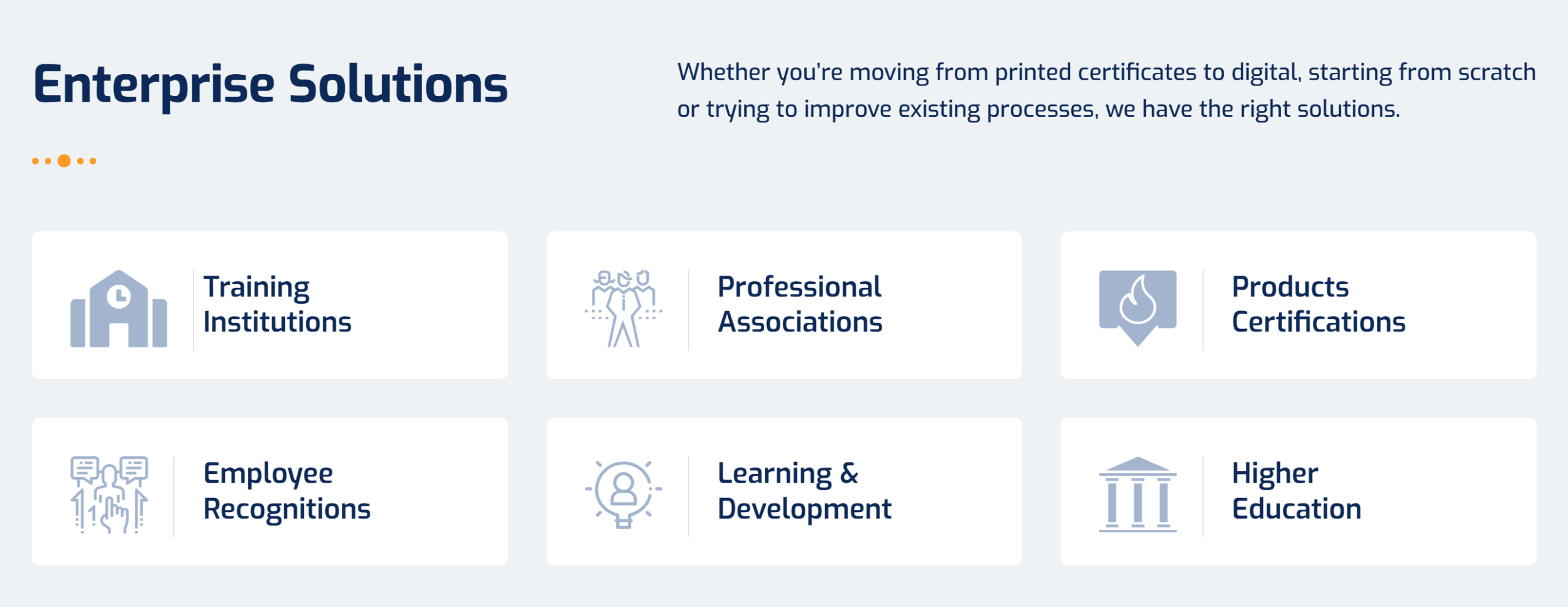
8. Who Benefits from Digital Credentialing Platforms?
Digital credentialing serves a wide range of organizations:
Educational Institutions
- Faster issuance
- Reduced administrative workload
- Global recognition
Training Providers
- Bulk certificate automation
- Skill-based badge issuance
- Improved learner satisfaction
Professional Associations
- Secure membership credentials
- Digital ID cards
- Enhanced trust and authority
Certification Bodies
- Centralized credential management
- Long-term verification records
- Compliance-ready documentation
9. Digital Credentialing and Long-Term Record Management
Credentials must remain accessible years after issuance.
Digital credential platforms provide:
- Lifetime credential storage
- Reduced reissue requests
- Simplified verification for alumni
This benefits both learners and institutions by preserving trust and reducing administrative burden.
10. Security, Compliance, and Institutional Trust
Credential data includes sensitive personal and academic information. Digital platforms apply secure storage, controlled access, and audit-ready records.
Institutions using digital credential software demonstrate professionalism, transparency, and accountability—critical for accreditation and compliance.
11. Digital Credentials as Strategic Assets
Beyond operations, digital credentials:
- Strengthen institutional branding
- Improve employability outcomes
- Act as organic marketing through social sharing
- Support lifelong learning ecosystems
They are no longer administrative outputs—they are strategic assets.
12. The Future of Credentialing
Credentialing is becoming infrastructure, not documentation. Institutions that adopt digital credential platforms today will:
- Launch programs faster
- Scale globally
- Maintain credibility
- Meet employer and learner expectations
Those that delay risk obsolescence.
Conclusion
Digital credentialing is not a trend—it is a structural shift. Digital certificates, digital badges, and digital ID cards together form a secure, scalable, and future-ready credentialing ecosystem.
Institutions that adopt subscription-based digital credential software like Accreditor India gain efficiency, credibility, and global relevance—while preparing for the future of education, certification, and professional trust.
👉 Visit www.accreditorindia.co